
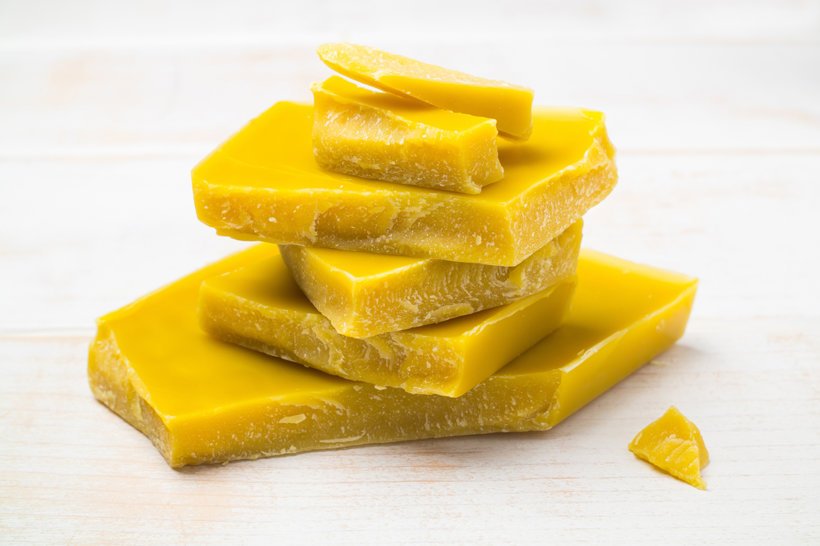
If there’s one ingredient that defines us here at Neve’s Bees, it’s beeswax (Cera alba). Created by honeybees to build the honeycomb, beeswax is the very fabric of the hive. Strong yet flexible, protective yet breathable, it’s a material that has supported both bees and humans for millennia. In skincare, beeswax continues this legacy, creating a natural, breathable barrier that locks in moisture, soothes dryness, and nurtures the skin — all while carrying the warm, comforting scent of honey.
Quick facts
Botanical name: Cera alba
Texture: Protective, balm-like and smoothing
Best for: Dry, compromised or weather-exposed skin
Key benefits: Protects skin, locks in moisture, supports barrier function
Used in:
- Hand Salves (across the range) – deeply moisturising and protective for hard working hands
- Lip Balms – used in all flavours
- Moisturising Balms like Face The Day Moisturising Balm – beeswax helps lock in moisture and support skin barrier
- Natural Deodorants – acts as a great natural base for our stick form deodorants
Beeswax & the bees
Beeswax is produced by young worker bees, secreted as tiny flakes from special wax glands on their abdomens. The bees then shape the wax into perfect hexagonal cells, forming the honeycomb that holds the colony’s food and young. It’s one of nature’s most remarkable building materials: lightweight, durable, and so precisely engineered that humans still marvel at its geometry.
For bees, wax is life. It provides structure, security, and storage: a shield against the elements and a cradle for future generations. When harvested carefully, taking only the surplus from cappings of the excess honey stores, after the bees have what they need, wax can be shared with us without harming the colony. In this way, beeswax becomes a symbol of reciprocity: a gift from the hive that supports both bees and people.
Origins
Humans have been using beeswax for over 9,000 years. Archaeological finds show beeswax was used in Neolithic cave paintings, as a lubricant and polish for tools, and in early medicine. The Ancient Egyptians treasured it for embalming and cosmetics, while the Greeks and Romans used it in writing tablets, candles, and salves.
In medieval Europe, beeswax candles were so highly prized for their clean burn and sweet scent that only churches and the wealthy could afford them. Everyday folk made do with smoky tallow candles, but beeswax was reserved for sacred spaces and grand halls. Its reputation for purity and protection has endured ever since.
How it's made
After the excess honey is extracted, the wax cappings are filtered and washed with water. The result is a creamy, honey-scented wax that blends beautifully with oils and butters to form balms and salves.
Skin benefits of Beeswax
Beeswax has a unique ability to shield and restore. Here’s why it’s a skincare staple for us:
- Forms a breathable barrier: Unlike petroleum-based products, beeswax locks in moisture while still allowing skin to breathe.
- Soothes and softens: Rich, creamy, and naturally emollient, it helps calm dryness and leave skin supple.
- Protects against irritation: With natural antibacterial properties, beeswax helps to defend sensitive skin.
- Supports renewal: Its natural vitamin A content encourages cell turnover, supporting healthy skin regeneration.
Well-being benefits
There’s something deeply comforting about beeswax. Its gentle honeyed aroma carries the warmth of the hive: grounding, natural, and familiar. It’s why beeswax has been used not only in skincare, but also in aromatherapy candles, polishes, and ointments & balms throughout history. To use beeswax is to connect to a long tradition of care and craftsmanship.
The experience
In our balms, beeswax gives structure and staying power. It melts gently into the skin, forming a protective layer that feels natural, not heavy. Unlike synthetic waxes, it works in harmony with oils and butters, creating textures that are rich yet breathable. That’s why a tin of balm with beeswax feels so satisfying to use: it’s protective, nurturing, and a little bit luxurious.
Why we use Beeswax in our skincare
Beeswax is where our story begins. It’s the foundation of our balms, the natural shield that helps oils stay on the skin and do their work. For us, it’s more than an ingredient — it’s a connection to the bees themselves.
Sustainability and sourcing
Our beeswax is harvested with care from our own hives and those from trusted local beekeepers. We take only what the bees don’t need, ensuring their colonies remain strong and thriving.
Fun fact
In medieval Europe, only churches and the wealthy could afford beeswax candles, prized for their clean burn and sweet scent.
Used in
- Neve’s Bees Lip Balms (entire range)
- Neve’s Bees Tinted Lip and Cheek Balms (entire range)
- Neve’s Bees Hand Salves (entire range)
- Neve’s Bees Moisturising Balms (normal skin, men’s and sensitive skin)
Final thoughts
Beeswax is one of nature’s marvels: a protective shield, a gift from the hive, and a symbol of reciprocity between bees and humans. In skincare, it locks in moisture, softens, and protects, while its gentle honeyed scent brings comfort and warmth.
For us, beeswax is both a base for our products and a daily reminder of the extraordinary work of bees, and of the importance of protecting them. Every balm we make carries a little of the hive: natural care at its finest, and a connection to the pollinators that make life possible.
Julie Macken

After graduating with a Chemistry Degree and subsequent MBA, Julie spent 25 years 'in corporate life' working in Sales and Marketing for companies including Unilever and GSK. Her 'aha moment' came whilst running a marketing workshop in Brazil persuading South Americans to eat plastic-packed frozen chips instead of fresh potato.
Realising there were more fulfilling ways to utilise her skills, Julie founded Neve's Bees a family skincare business – creating a unique range of waterless skincare, using only natural and sustainable ingredients blended with Oxfordshire beeswax, promoting healthy skin and a healthy eco-system. Following a lifelong passion, Julie is also studying part time for a degree in Traditional Herbal Medicine.
Julie lives in Rural Oxfordshire with her husband, 2 children, 3 cats, 4 hens, 5 beehives, 6-acre wildflower meadow…and Bella the Dog.

