
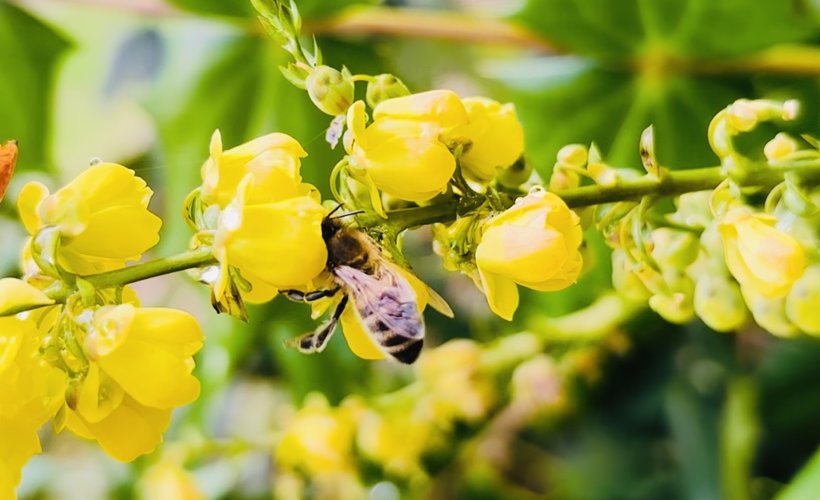
If you’ve ever stood in your garden on a warm summer afternoon and noticed it’s gone a bit… quiet… you’re not alone.
Bee numbers in the UK have been declining for years, and it’s something that hits close to home for us here at Neve’s Bees. Since we started the business 8 years ago, we’ve been on a mission to help bring back the bees. One of the first things we did when we moved here was to turn our field into a wildflower meadow (see our blog about that here how to create a wildflower meadow).
So… when people ask us what they can do to help, our answer is always the same: plant bee friendly plants 🐝 It doesn’t matter whether you have a window box, a small patio, or a larger garden. You can make a difference.
What are the best plants for bees?
If you’re wondering what to plant to attract bees, there are a few reliable, bee friendly plants that come up again and again. Lavender, foxgloves, borage, clover, and sunflowers are among the best plants for bees, but the real secret is variety. Different species need different flower shapes, and they need food from early spring through to late autumn. The more variety you plant, the more pollinators you’ll support.
Here are some of our favourites:
Lavender
Our personal favourite, for obvious reasons. It’s one of the most dependable plants for pollinators, flowering all summer and attracting huge numbers of bees. Plant it in a sunny spot with well-drained soil and it will come back year after year. You can learn more about lavender and how we use it in our products here.
Foxgloves
These classic cottage garden plants are excellent bee friendly plants for borders. Their tall, tubular flowers are perfectly suited to long-tongued bumblebees, and once established, they’ll self-seed and return with very little effort.
Borage
A bit of a hidden gem, and one of the most effective plants for bees you can grow. It flowers continuously through summer and helps fill the “nectar gap” when other plants fade. We also use borage oil in many of our products, so it’s a firm favourite of ours.
Clover
Often overlooked, but incredibly valuable. Red clover is especially good for bumblebees, while white clover attracts honeybees. If you’re looking for low-effort bee friendly planting, simply mowing less can make a big difference.
Sunflowers
Easy to grow and full of life. What looks like one large flower is actually made up of hundreds of tiny ones, making sunflowers a brilliant food source. They’re one of the most rewarding plants for bees and pollinators, especially if you’re growing from seed.
🪴 Can I grow bee friendly plants in pots?
Yes, absolutely. If you’re working with a small space, there are plenty of bee friendly plants for pots that do really well in containers. Lavender, borage, herbs like thyme and rosemary, and even compact sunflowers can all thrive in pots on a balcony or windowsill. In urban areas, these small pockets of planting are incredibly important. They help create a network of food sources for bees moving between gardens.
When should I plant for bees?
The goal is to have something flowering for as much of the year as possible.
Different bees emerge at different times, so planting a mix of plants for bees across the seasons is key.
A simple way to think about it:
- Autumn (September–November)
Plant trees, shrubs, and spring bulbs like crocus and alliums. These provide early food when bees first emerge. - Spring (March–May)
Plant perennials and herbs like lavender, salvia, echinacea, and borage. These support peak activity through summer. - Late season (August onwards)
Include plants like sedum, asters, and ivy to extend the food supply into autumn.
This kind of planting helps create a steady, reliable food source for pollinators throughout the year. For best results, include a mix of early (snowdrops, crocus), mid (lavender, foxglove), and late (sedum, asters, ivy) flowering plants, ensuring bees have a continuous food source from late winter through autumn.
Do bees prefer certain types of plants?
They do, but it’s less about colour and more about structure.
Bees are drawn to purples and blues, which is why so many bee friendly plants fall into those shades. But what really matters is how easy it is to access the nectar.
- Open, simple flowers are best for most bees
- Tubular flowers suit specific species
- Double flowers often look beautiful but offer very little food
If you’re choosing between varieties, simpler is almost always better. That said, bees visit flowers of all colours, so don’t let that stop you planting whatever you love.
Do I need a big garden to help bees?
Not at all. Even a few well-chosen plants for bees in pots can make a meaningful difference.
If you do have more space, planting in small groups or clusters helps bees find and return to the plants more easily. It’s a simple way to make your garden more inviting.
What else can I do to make my garden bee-friendly?
Planting is the biggest step, but there are a few other simple things that help:
- Leave a patch of lawn unmowed so clover and dandelions can grow
- Avoid pesticides, especially those harmful to pollinators
- Provide water with a shallow dish and pebbles
- Add a bee hotel for solitary bees
These small changes all add up to a much more supportive environment.
A note from us
We think about bees a lot around here. Every time we make a batch of our beeswax balms or natural oils, we’re reminded that what we do is only possible because of these extraordinary little pollinators. Creating a garden that supports them feels like the very least we can do in return.
So whether you plant one pot of lavender on your kitchen windowsill or turn your whole back garden into a wildflower meadow, you’re doing something that genuinely matters.
Happy planting. 🐝
Julie Macken

After graduating with a Chemistry Degree and subsequent MBA, Julie spent 25 years 'in corporate life' working in Sales and Marketing for companies including Unilever and GSK. Her 'aha moment' came whilst running a marketing workshop in Brazil persuading South Americans to eat plastic-packed frozen chips instead of fresh potato.
Realising there were more fulfilling ways to utilise her skills, Julie founded Neve's Bees a family skincare business – creating a unique range of waterless skincare, using only natural and sustainable ingredients blended with Oxfordshire beeswax, promoting healthy skin and a healthy eco-system. Following a lifelong passion, Julie is also studying part time for a degree in Traditional Herbal Medicine.
Julie lives in Rural Oxfordshire with her husband, 2 children, 3 cats, 4 hens, 5 beehives, 6-acre wildflower meadow…and Bella the Dog.


